
For years, I have routinely checked red blood cell (RBC) magnesium levels in my patients at The Hormone Zone®. Magnesium is easy to overlook because it seems so basic, yet it is involved in hundreds of enzymatic reactions and plays an important role in cardiovascular function, glucose metabolism, energy production, inflammation, vascular health, and nitric oxide signaling.
Now we have another reason to pay attention to magnesium: erectile function.
A 2026 study published in Medicine examined chronic magnesium depletion and erectile dysfunction (ED). Researchers analyzed 3,692 American men and found a significant association between greater magnesium depletion and ED.
This interests me because erectile dysfunction is rarely just about erections. In many men, it is a window into what is happening metabolically and vascularly throughout the body.
Erectile Dysfunction Is Often a Vascular Warning Sign
An erection is fundamentally a vascular event. Blood vessels have to dilate, endothelial cells have to function properly, nitric oxide needs to be available, smooth muscle needs to relax, and blood needs to flow efficiently into the erectile tissue.
This is one reason ED can sometimes precede more obvious cardiovascular problems. It is associated with cardiovascular disease, diabetes, and metabolic syndrome.
Magnesium sits in the middle of many of these pathways. It helps regulate vascular tone, glucose and lipid metabolism, and inflammatory signaling. Magnesium deficiency has been associated with endothelial dysfunction, oxidative stress, inflammation, insulin resistance, metabolic syndrome, and diabetes.
Calculate Your Magnesium Depletion Score
Instead of relying upon serum magnesium, researchers used a Magnesium Depletion Score (MDS). It is a simple 0–5 score based on four factors associated with chronic magnesium depletion.
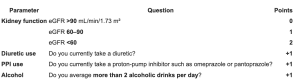
For purposes of the study, one alcoholic drink was approximately 14 grams of alcohol. The maximum MDS is 5, and higher scores indicate greater risk of chronic magnesium depletion.
MDS = Kidney Function Points + Diuretic Use + PPI Use + Heavy Alcohol Use
The results were striking. For every one-point increase in MDS, the fully adjusted odds of ED increased approximately 40%. Men with an MDS of 2 or greater had more than twice the odds of ED compared with men scoring below 2.
Risk began increasing around an MDS of 1 and rose much more sharply once the score exceeded 3.
That doesn’t prove magnesium deficiency causes ED or that taking magnesium cures it. The genetic analyses were more nuanced and suggest magnesium may be one component of the broader cardiometabolic environment associated with erectile dysfunction.
Why I Check RBC Magnesium
One statement in this paper reinforces something I have emphasized clinically for years: a normal serum magnesium doesn’t necessarily tell us the whole story.
The authors note that serum magnesium is tightly regulated and may not reliably identify chronic magnesium deficiency.
That is why I routinely check RBC magnesium at The Hormone Zone. RBC magnesium isn’t a perfect measurement of total-body magnesium either, but it gives me another window into magnesium status beyond a conventional serum magnesium test.
I now like the idea of looking at both RBC magnesium and the Magnesium Depletion Score. They approach the same problem from different directions: one is a laboratory measurement, while the other identifies circumstances that increase the likelihood of chronic magnesium depletion.
Magnesium, Nitric Oxide, and Erections
This may be where magnesium becomes especially relevant to men’s sexual health.
Magnesium supports endothelial nitric oxide synthase and nitric oxide-dependent vasodilation. Magnesium deficiency may impair nitric oxide signaling while contributing to oxidative stress, inflammation, arterial stiffness, and endothelial dysfunction.
Nitric oxide is fundamental to erectile physiology, which is why I also routinely assess nitric oxide levels in my patients. When nitric oxide is suboptimal, I don’t simply ignore the number—I work to improve it. Nitric oxide support is a supplement I routinely use as part of our cardiovascular, vascular, and sexual-health optimization programs at The Hormone Zone.
This is also why treating ED should go far beyond simply prescribing Viagra or Cialis. Those medications can certainly be useful, but I want to know why the vascular system isn’t functioning optimally in the first place.
I look at testosterone and estradiol, insulin resistance, glucose, blood pressure, ApoB and cardiovascular risk, inflammation, body composition, exercise, sleep, smoking, alcohol, magnesium—and nitric oxide.
How I Use Magnesium at The Hormone Zone
When magnesium status is suboptimal or I believe a patient would benefit clinically, I commonly use magnesium glycinate because it is generally well tolerated.
In my practice, I commonly prescribe what I consider prescription-strength supplementation—approximately 1,200 to 1,800 mg of magnesium glycinate per day, individualized according to the patient, laboratory findings, kidney function, medications, diet, and clinical goals.
Importantly, 1,200–1,800 mg of magnesium glycinate is not 1,200–1,800 mg of elemental magnesium. The actual elemental magnesium depends upon the formulation, so the Supplement Facts label needs to be interpreted correctly.
Treat the Physiology, Not Just the Symptom
Erectile dysfunction may be the complaint that brings a man into the office, but sometimes the erection is simply the check-engine light.
What is happening to his endothelial function? Is nitric oxide adequate? Is he insulin resistant? Is testosterone optimized? Is inflammation elevated? Is he metabolically healthy? Is he losing magnesium because of medications, alcohol, or underlying physiology?
This study does not prove magnesium supplementation prevents or reverses ED. What it does show is that men with greater evidence of chronic magnesium depletion had substantially greater odds of erectile dysfunction.
For me, it is another reason why I routinely check RBC magnesium, magnesium depletion risk, and nitric oxide rather than waiting for these systems to become obviously dysfunctional.
Sometimes sophisticated medicine means advanced hormone therapy, peptides, regenerative treatments, and cutting-edge diagnostics.
And sometimes it means making sure the body has enough of one of its most fundamental minerals—and the nitric oxide signaling necessary to put that vascular system to work.
Source:
Zhang Z, Yan M, Wu S, et al. Magnesium depletion score and erectile dysfunction: A cross-sectional and Mendelian randomization study. Medicine. 2026;105(30):e49938.