By Dr. John A. Robinson, NMD & Dr. Cristina Romero-Bosch, NMD
The Hormone Zone
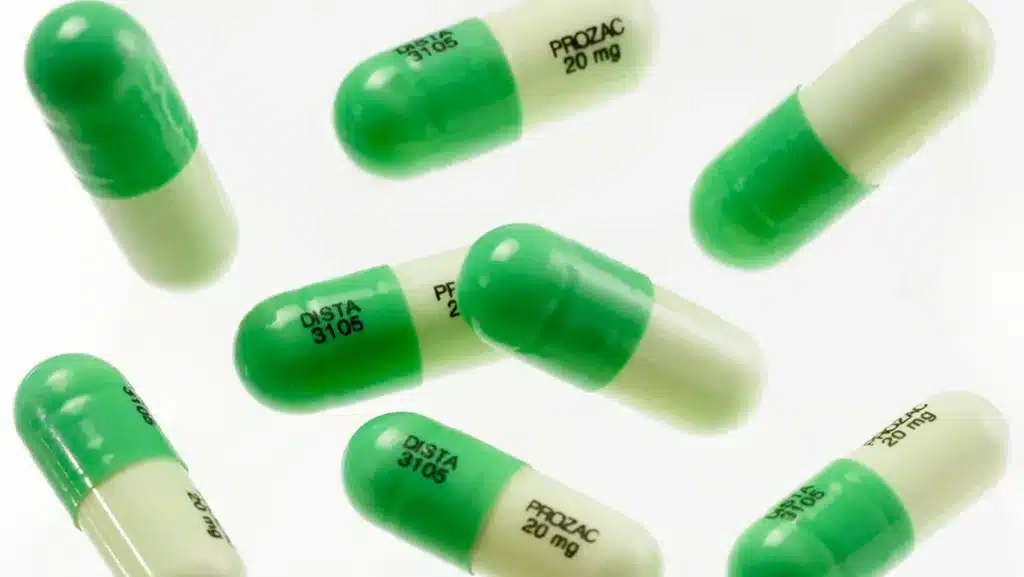
Selective serotonin reuptake inhibitors (SSRIs), including medications such as sertraline, escitalopram, fluoxetine and paroxetine, are widely prescribed for depression, anxiety and other psychiatric conditions. They are also well known to affect sexual function, yet when women experience these changes, the problem is often reduced to “low libido.”
That description is often incomplete. Some women still want sex and remain attracted to their partner, yet notice that their clitoris feels less sensitive or numb, physical arousal is harder to achieve, orgasm takes much longer or an orgasm still occurs but feels remarkably weak or pleasureless. Desire, sensation, arousal, orgasm and pleasure are distinct parts of the sexual response, and an SSRI can potentially interfere with several of them.
This Isn’t Always PSSD
It is important to distinguish sexual dysfunction occurring while taking an SSRI from symptoms that persist after the medication has been stopped. The latter is referred to as post-SSRI sexual dysfunction, or PSSD, and may include persistent genital numbness, decreased libido, impaired genital arousal, delayed or absent orgasm and diminished orgasmic pleasure.
Many patients, however, are still taking an SSRI because they and their prescribing clinician determine that the medication remains necessary. They may not have PSSD, but they may still experience substantial changes in libido, clitoral sensation, arousal or orgasm.
For these patients, the question should not simply be whether the SSRI can be stopped. We should also ask whether the sexual-response systems being affected by the medication can be supported while treatment continues.
Understanding the Brain-Clitoris Connection
The clitoris is a highly specialized neurovascular sensory organ. During sexual arousal, nitric oxide increases genital blood flow and clitoral engorgement. Sensory nerves then transmit information through the spinal cord to the brain, where that signal is integrated with systems controlling desire, sexual salience, reward and pleasure.
SSRIs increase serotonergic signaling, but serotonin interacts extensively with dopamine, norepinephrine, oxytocin, nitric oxide and other pathways involved in sexuality. Increased serotonergic activity can suppress dopaminergic reward pathways, while chronic exposure can produce adaptations in serotonin receptors and downstream neural networks.
This may explain why one woman cannot feel her clitoris normally, while another can feel touch but says it no longer feels erotic. A third may become physically aroused and reach orgasm yet describe it as empty or pleasureless. These may represent different combinations of peripheral sensory dysfunction, impaired genital blood flow, hormonal changes and altered central reward processing.

Why Can Symptoms Persist?
PSSD remains incompletely understood. Proposed mechanisms include persistent serotonin-receptor changes, reduced dopaminergic responsiveness, alterations in neurosteroids such as allopregnanolone, changes in nitric-oxide signaling, peripheral sensory or ion-channel dysfunction and potentially longer-lasting neuroplastic or epigenetic changes.
Preliminary literature has also raised the possibility that genital numbness may sometimes involve functional changes in sensory signaling rather than permanent nerve destruction. This is important because a patient with predominantly peripheral sensory dysfunction may require a different strategy from someone whose main problem is central loss of sexual reward.
Potential Treatment Strategies
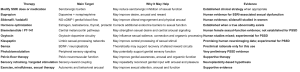
The therapeutic approach should therefore depend on which component of sexual physiology appears to be impaired. Some interventions have human evidence for antidepressant-associated sexual dysfunction, while others remain experimental specifically for PSSD.
Dopamine and Sexual Reward
Dopamine is particularly important because it contributes to sexual motivation, anticipation and reward. Increased serotonergic activity may blunt these pathways, causing sexual stimulation to lose some of its normal intensity and significance.
Bupropion is one of the better-supported options in this setting because it primarily affects dopamine and norepinephrine. Randomized clinical research has demonstrated improvements in several domains of female sexual function in women experiencing SSRI-associated sexual dysfunction. For an appropriate patient who needs to remain on an SSRI, adjunctive bupropion may therefore be worth discussing with the clinician managing her psychiatric treatment.
The ultimate goal may not simply be to raise dopamine continuously. Ideally, we would restore the normal dopaminergic response to sexual stimulation, allowing touch, anticipation and intimacy to once again produce an appropriate reward signal.
PT-141, Oxytocin and Kisspeptin
Bremelanotide, or PT-141, activates central melanocortin pathways involved in sexual desire and arousal and appears to interact with dopaminergic sexual circuitry. It has human clinical evidence in women with hypoactive sexual desire disorder, although it has not been established as a treatment for PSSD.
Oxytocin may be relevant through a different pathway. Sexuality involves interconnected dopamine, oxytocin and reward systems, and oxytocin participates in intimacy, bonding and orgasmic physiology. Human trials of intranasal oxytocin for female sexual dysfunction have produced mixed results, but it remains mechanistically interesting for patients who can detect sexual stimulation yet have lost much of the pleasure, excitement or connection associated with it.
Kisspeptin is another emerging therapy of interest. Beyond its reproductive endocrine role, it influences brain regions involved in sexual attraction, emotional processing and reward. Human neuroimaging studies in women with hypoactive sexual desire disorder have shown changes in sexual-processing brain networks following kisspeptin administration. It remains experimental for SSRI-induced dysfunction and PSSD, but it may be relevant when sensory input is intact yet central sexual processing appears diminished.
Neuroplasticity and Semax
If chronic serotonergic exposure produces persistent changes within sexual reward circuits, transiently increasing dopamine may not be enough. The nervous system may need to relearn how to respond normally to sexual stimulation.
Semax has preclinical evidence involving BDNF, neurotrophic pathways and monoaminergic signaling. There are no clinical trials demonstrating that Semax treats PSSD, so its use in this setting remains experimental. However, the larger concept of using neuroplasticity while repeatedly pairing genital stimulation with sexual arousal and reward is an intriguing area for future investigation.

Supporting Clitoral Blood Flow
Not every SSRI-related sexual problem originates entirely within the brain. The clitoris contains erectile tissue, and normal engorgement depends upon vascular function and nitric-oxide signaling. Reduced engorgement may decrease both physical arousal and the sensory input generated by stimulation.
This is why PDE5 inhibitors such as sildenafil and tadalafil may be useful in selected patients. Sildenafil has randomized controlled trial evidence in women with antidepressant-associated sexual dysfunction. Broader endothelial health, nitric-oxide physiology and cardiovascular risk factors should also be considered when genital arousal appears impaired.
Photobiomodulation and Genital Sensation
Photobiomodulation using red and near-infrared light is another emerging possibility, especially when genital numbness is a dominant symptom. Preliminary PSSD literature has suggested possible effects on sensory nerve function, mitochondrial activity and ion channels involved in peripheral sensory signaling.
The evidence is far too limited to conclude that photobiomodulation restores clitoral sensation, but it represents a biologically plausible area for additional research, particularly because genital anesthesia appears distinct from generalized loss of sexual desire.
Hormone Optimization Still Matters
Even when an SSRI is clearly contributing to sexual dysfunction, it may not be the only factor. Estrogen deficiency, low androgen activity, elevated SHBG, thyroid dysfunction, hyperprolactinemia and menopausal vulvovaginal changes can all independently impair sexual function.
Estrogen supports vulvar and vaginal tissue health and contributes to genital vascular physiology, while testosterone influences desire and arousal. If an SSRI is already creating a neurological brake on sexuality, hormonal deficiencies or impaired genital tissue health may compound the problem considerably. This is why a comprehensive hormonal and physiological evaluation remains important.

Sexual Neurological Rehabilitation
Perhaps the most interesting future direction is to stop viewing these therapies in isolation. If chronic serotonergic signaling has weakened the association between genital stimulation and central reward, treatment may eventually involve deliberately strengthening that connection again.
For an appropriately selected patient, this could involve improving clitoral blood flow, optimizing hormones, addressing pelvic-floor function, providing consistent genital sensory stimulation and supporting central arousal and reward pathways. Investigational therapies such as PT-141, oxytocin, kisspeptin, photobiomodulation or neuroplasticity-directed approaches could potentially be incorporated as the science develops.
We might think of this as sexual neurological rehabilitation: repeatedly pairing strong genital sensory input with an optimized state of arousal, reward and pleasure in an effort to reinforce that neural association over time. This remains theoretical, but it offers a more sophisticated framework than simply labeling every patient as having “low libido.”
A Better Way to Evaluate the Problem
The most important question is not simply whether a woman has sexual dysfunction, but what component has changed. Does she still desire sex? Can she detect clitoral touch normally? Does that touch still feel erotic? Does the clitoris become engorged? Does her body respond when she becomes mentally aroused? Can she reach orgasm, and if so, does it still produce pleasure?
These answers help distinguish predominantly desire-related, sensory, vascular, hormonal, orgasmic and central-reward dysfunction. Many women will have elements of several categories, which is why a comprehensive approach may be necessary.
For some patients, changing or discontinuing an SSRI may be appropriate. For others, the medication needs to remain. In those cases, the goal does not necessarily have to be choosing between psychiatric treatment and sexual health. We can instead investigate which physiological systems are being affected and determine whether they can be supported while treatment continues.
PSSD remains an evolving area of medicine, and several therapies discussed here are investigational specifically for persistent post-SSRI dysfunction. We should be transparent about those limitations without making the opposite mistake of telling patients that nothing can be done.
At The Hormone Zone, we believe sexual health deserves the same physiological curiosity and individualized attention as every other aspect of health. Desire, arousal, sensation, orgasm, pleasure, intimacy and connection are deeply connected to neurological, vascular and hormonal health and deserve to be taken seriously.
Sexual health is health, and preserving our capacity for intimacy, connection and pleasure is an important part of the art and science of living the well-lived life.
Sources
- Xie M, Huang P, Wang S, et al. Post-SSRI Sexual Dysfunction (PSSD): A comprehensive review of epidemiology, pathophysiology, and clinical management. International Journal of Risk & Safety in Medicine. 2026.
- Dagostin Ferraz S, Kuyunga L, Rech P, et al. Sexual dysfunction associated with selective serotonin reuptake inhibitors in adults with depression: a systematic review and meta-analysis. European Journal of Clinical Pharmacology. 2026;82:82.
- Brugi S, Bell E, Budd B, Fish S. The use of patient-reported outcome measures in assessing the prevalence and tolerance of SSRI-related sexual dysfunction: a systematic review. The Journal of Sexual Medicine. 2026;23(8):qdag218.
- Bala A, Nguyen HMT, Hellstrom WJG. Post-SSRI Sexual Dysfunction: A Literature Review. Sexual Medicine Reviews. 2018;6(1):29–34.
- Nurnberg HG, Hensley PL, Heiman JR, et al. Sildenafil treatment of women with antidepressant-associated sexual dysfunction: a randomized controlled trial. JAMA. 2008;300(4):395–404.
- Safarinejad MR. Reversal of SSRI-induced female sexual dysfunction by adjunctive bupropion in menstruating women: a double-blind, placebo-controlled and randomized study. Journal of Psychopharmacology. 2011;25(3):370–378.
- Kingsberg SA, Clayton AH, Portman D, et al. Bremelanotide for the treatment of hypoactive sexual desire disorder: two randomized phase 3 trials. Obstetrics & Gynecology. 2019;134(5):899–908.
- Muin DA, Wolzt M, Marculescu R, et al. Effect of intranasal oxytocin on sexual dysfunction in women: a randomized trial. Fertility and Sterility. 2015.
- Mills EG, Abbara A, Comninos AN, et al. Kisspeptin administration modulates sexual and emotional brain processing in women with hypoactive sexual desire disorder. JAMA Network Open. 2022.
- Healy D, LaPalme J, Levin M. Post-SSRI Sexual Dysfunction: A Bioelectric Mechanism? Bioelectricity. 2020;2(1):7–13.
Clinical note: PSSD currently has no FDA-approved treatment. Oxytocin, kisspeptin, Semax, photobiomodulation and sensory-retraining strategies should be considered investigational specifically for PSSD, while therapies such as bupropion, medication modification and sildenafil have more direct evidence for antidepressant-associated sexual dysfunction.
Dr. John A. Robinson, NMD & Dr. Cristina Romero-Bosch, NMD
The Hormone Zone